Weight, Balance, and Wood: Reading a Bow Before You Ever Draw a Sound
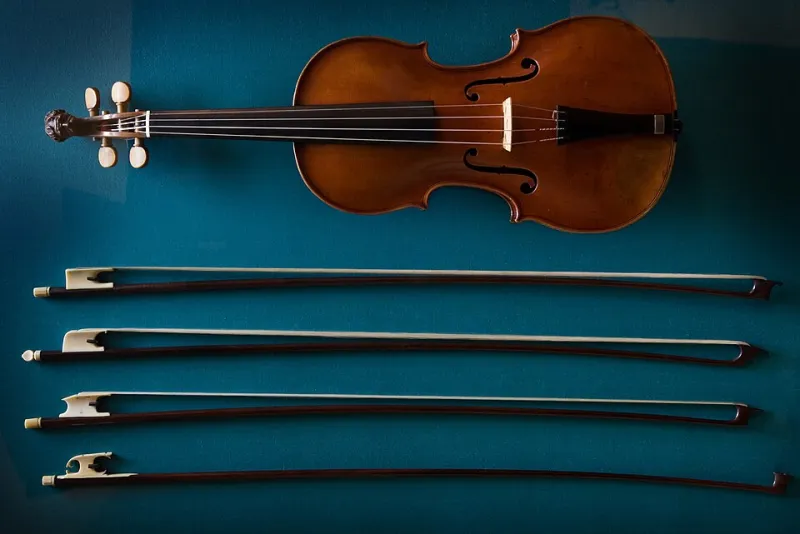
Photo: Jorge Royan, CC BY-SA 3.0, via Wikimedia Commons
Ask a young violinist in an American conservatory corridor what instrument they play, and they will tell you the maker, the year, perhaps the provenance of the wood. Ask them about their bow, and the answer is often a shrug. This imbalance is curious, because the bow is the violinist's breath. The left hand decides what is said; the bow decides how it is said — the color, the weight, the phrasing that carries a phrase from the stage to the last row of a hall like Tanglewood's Shed or a recital room at Juilliard.
The Bow as the Speaking Voice
Think of the difference between a whisper and a declaration. The same text, the same voice — but an entirely different effect. The bow governs that register of expression. Its weight determines how a string is set into vibration; its balance point determines whether spiccato bounces with ease or labor; its stiffness or suppleness determines whether a legato line feels like silk or like rope.
This is why a change of bow can transform a player's sound more dramatically than a change of violin. A responsive, well-matched bow can make an ordinary instrument speak; a mismatched bow can make a great one sound dull. Students preparing for auditions — whether for a youth orchestra in Chicago or a graduate program in Boston — should treat bow selection as a matter of musicianship, not accessory shopping.
Pernambuco, Brazilwood, and Carbon Fiber
The traditional material is pernambuco, a dense tropical wood from Brazil whose combination of strength and elasticity has never been fully replicated. Bows of pernambuco, particularly those from French workshops of the nineteenth and early twentieth centuries, remain the reference point against which everything else is measured. Brazilwood, a more common and less resonant cousin, serves well for beginners but eventually reveals its ceiling.
Carbon fiber, once dismissed as a compromise, has matured into a legitimate alternative. Modern carbon bows are stable in humidity and temperature — a real advantage for players touring between the dry air of Denver and the humidity of a New York August — and the finest examples offer remarkable playing qualities at a fraction of the price of a good French stick. For a student flying to a summer festival, a carbon bow in the carry-on is also a form of insurance no heirloom can offer.
What to Test Before You Buy
A bow should be evaluated with the same rigor as an instrument. Before committing, a student should:
- Play long, slow whole bows on all four strings, listening for evenness and for any wobble in the stick's response.
- Test the balance by holding the bow loosely at the frog and feeling whether it draws itself or demands to be pushed.
- Try rapid detached strokes — spiccato, sautillé, ricochet — and notice whether the bow cooperates or fights.
- Compare on more than one violin, since bow and instrument interact in ways that defy prediction.
- Play repertoire, not exercises. A lyrical passage from the Brahms concerto will reveal qualities no scale can.
Heirloom or Contemporary
Families sometimes face a choice between a grandfather's bow and a newly made one. An heirloom carries history, and history has value — but only if the stick is healthy. Old bows can suffer from hidden repairs, warping, or a camber that has drifted over decades. A reputable archetier or dealer should examine any vintage bow before it becomes a student's daily companion.
A contemporary bow, meanwhile, offers the chance to match the player rather than the family tree. Many of today's American and European bow makers produce sticks of genuine distinction, and a student whose technique is still developing may find that a modern bow grows with them in ways an antique cannot.
A Final Word for Students
Budget matters, of course. But the hierarchy of spending is worth remembering: a modest violin with an excellent bow will serve a student better than the reverse. Try everything within reach, take your teacher along, and never buy a bow in a hurry. The right one will feel less like a purchase and more like a recognition — as though, all along, your playing had been waiting for it.