Before the Downbeat: The Silent Conversation Between Soloist and Orchestra
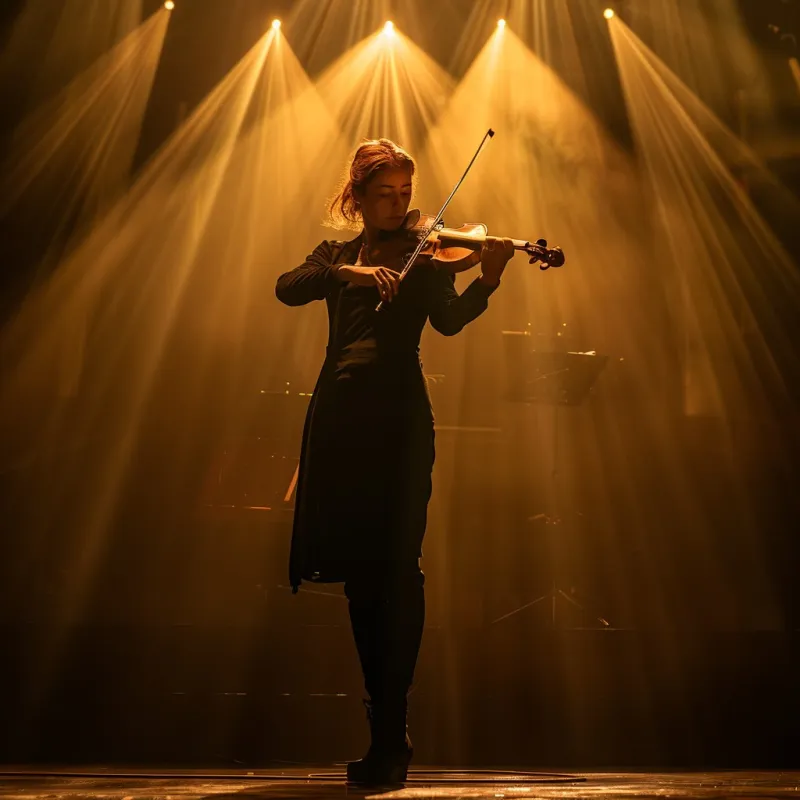
Photo: violin soloist walking onto orchestra concert stage from wings, via images.stockcake.com
Ask a section violinist what happened at last night's concert, and they will describe the soloist's tone, the cadenza, perhaps a risky tempo in the finale. Ask them what happened in the ninety seconds before any of it, and the answers become far more revealing.
Orchestra musicians are the most attentive audience in the hall. They sit close enough to hear the soloist breathe, close enough to see whether the rosin dust on a shoulder suggests a morning of practice or a week away from the instrument. And from the moment a soloist steps out of the wings, the professional evaluation begins — not with judgment, exactly, but with curiosity.
The Walk Is the First Movement
Every experienced player knows that the walk from the stage door to the chair is a form of communication. A soloist who crosses the platform at a measured, unhurried tempo signals a musician in command of the evening. One who sprints out, bow held like a briefcase, suggests someone treating the engagement as an airport layover.
Concertmasters talk about this in hushed, half-joking terms: the walking audition. It sounds unkind, but it reflects something real. Playing a concerto is an act of shared risk. The orchestra is being asked to follow a stranger through thirty minutes of treacherous repertoire, and human beings look for evidence of trustworthiness before they extend it.
What the Bow Tells You
The instrument itself offers clues. Section players notice bow tension almost instantly — a soloist who plays with the hair somewhat loose produces a warmer, more flexible sound, and that choice says something about priorities. They notice whether the violin is set down carefully or dropped into the chair. They notice how the soloist tunes: quickly and confidently, or with the anxious sawing that suggests the instrument is fighting back tonight.
None of this is aesthetic snobbery. In an ensemble, small physical habits scale up. A player whose bow arm is tense at rest will likely be tense in the fortissimo of a Brahms climax. A player who breathes before the first entrance invites the orchestra to breathe with them.
The Handshake Economy
The exchange with the concertmaster and the conductor carries its own weight. Soloists who take a genuine moment with the concertmaster — a word, a glance at the bowings, a shared joke — begin building the alliance that will carry them through the performance. Those who treat the handshake as a formality to be endured start the evening in arrears.
Veteran players can cite examples from across decades of touring soloists. The ones remembered fondly are rarely only the ones with the biggest sound. They are the ones who looked at the second violins during a pianissimo passage, who acknowledged the principal cello after a duet, who understood that a concerto is a conversation with two hundred people, not a monologue delivered over them.
What Happens When the Music Starts
Here is the part audiences rarely see: the moment the soloist lifts the instrument, the entire orchestra makes one final collective assessment. Do we follow this person gladly, or do we follow the conductor and let the soloist navigate alone?
The difference is audible. An orchestra that trusts its soloist plays with a generosity that no amount of rehearsal can manufacture — phrases breathe together, accompaniments lean forward at just the right moments, tuttis arrive with real weight. An orchestra that withholds that trust still plays correctly. Correctly is not the same as beautifully.
A Lesson Hiding in Plain Sight
For students, this pre-performance choreography offers something worth studying. The great soloists — and audiences of Shlomo Mintz's generation will have watched many of them walk onstage over five decades — tend to share habits: unhurried preparation, genuine attention to their colleagues, physical ease that begins before the first note.
These are not personality traits. They are skills, and like vibrato or spiccato, they can be practiced. The next time you attend a concerto, arrive early enough to watch the soloist's entrance. Watch the walk, the handshake, the settling into the chair. You are watching the first movement of the evening — and for the musicians onstage, quite possibly the most important one.