One Note, Four Hundred Forty Times a Second: The Strange Ceremony of the Orchestra's First Sound
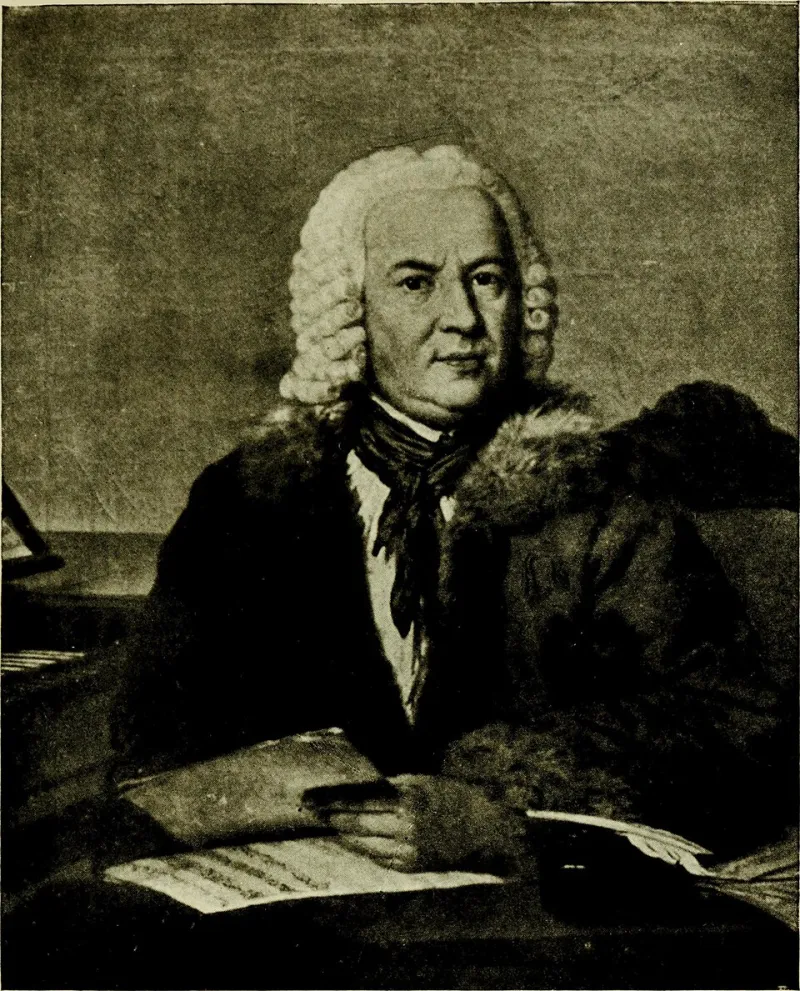
Photo: Internet Archive Book Images, No restrictions, via Wikimedia Commons
It is the least dramatic moment of any concert in America. The concertmaster rises, signals to the oboe, and for thirty seconds the hall holds its breath around a single tone. No composer is credited. No applause follows. And yet the entire evening depends on it.
The tuning A — that steady 440 Hz reference pitch — is so familiar to American audiences that it has become nearly invisible. But look closer, and this small ceremony opens onto two centuries of history, quiet disagreements between soloists and orchestras, and a question that philosophers of music have never quite answered: what does it mean for hundreds of musicians to agree on one sound?
A Pitch Without a Passport
For most of Western music's history, there was no such thing as a universal A. In the seventeenth and eighteenth centuries, pitch varied wildly from city to city. Organs in German churches might sit noticeably higher than strings in an Italian opera house, and traveling virtuosos carried tuning forks the way modern violinists carry spare strings. Some regions tuned high for brilliance; others tuned low for a warmer, darker sonority.
Standardization came slowly and pragmatically. By the early twentieth century, the American Federation of Musicians and the major orchestras of New York, Boston, and Chicago had settled on A = 440 Hz, and the 1939 international conference in London confirmed what practice had already decided. The number itself is arbitrary — a compromise, not a law of nature. There is nothing in the physics of a vibrating string that privileges 440 over 435 or 442. It is a convention, agreed upon so that a violinist flying from Cleveland to Vienna can step onto any stage in the world and be understood.
Why the Oboe, and Not a Tuner
Digital tuners now sit in every practice room in the country, accurate to the cent. So why does the concertmaster still rise, turn toward the woodwinds, and wait for the oboe's A?
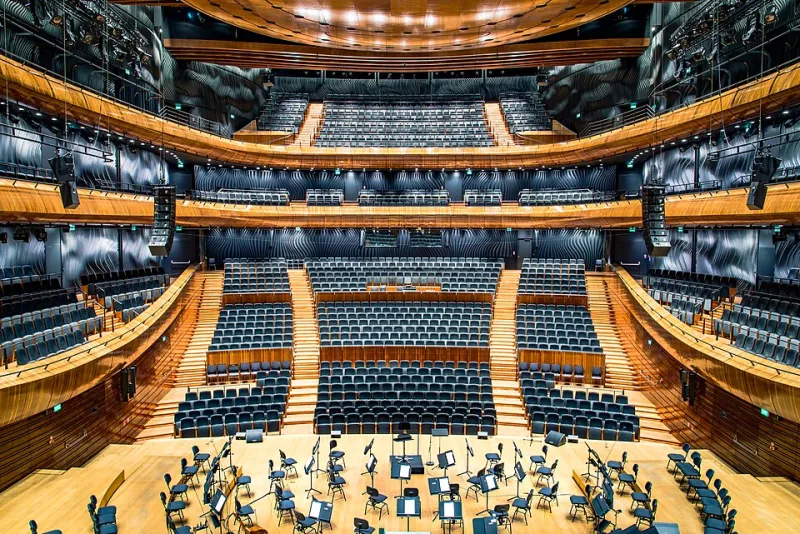
Because the oboe's pitch is not merely a frequency — it is a timbre, a reference point that the human ear can follow in a way a blinking needle cannot. The instrument's penetrating, slightly nasal tone cuts through an orchestra's din, allowing eighty musicians scattered across a stage to match it simultaneously. The oboist, in turn, calibrates to the hall itself, adjusting to the acoustics of venues as different as Carnegie Hall and a summer shed in Tanglewood.
The ritual, in other words, is not a relic. It is the first act of ensemble playing. Before a single downbeat, the orchestra practices the one skill that matters most: listening to each other.
When Soloists and Orchestras Disagree
Here is where the ceremony grows more interesting than audiences suspect. Not everyone tunes to the same A.
Some European orchestras favor 443 or 444 Hz, believing a slightly higher pitch produces more brilliance. Period-instrument ensembles routinely tune to A = 415 Hz — nearly a half step lower — to approximate the string tensions and vocal ranges of the eighteenth century. A baroque performance of a Bach concerto pitched at 415 sounds not merely different but transformed: darker, more transparent, the gut strings speaking with a gentle grain that steel strings at modern pitch cannot imitate.
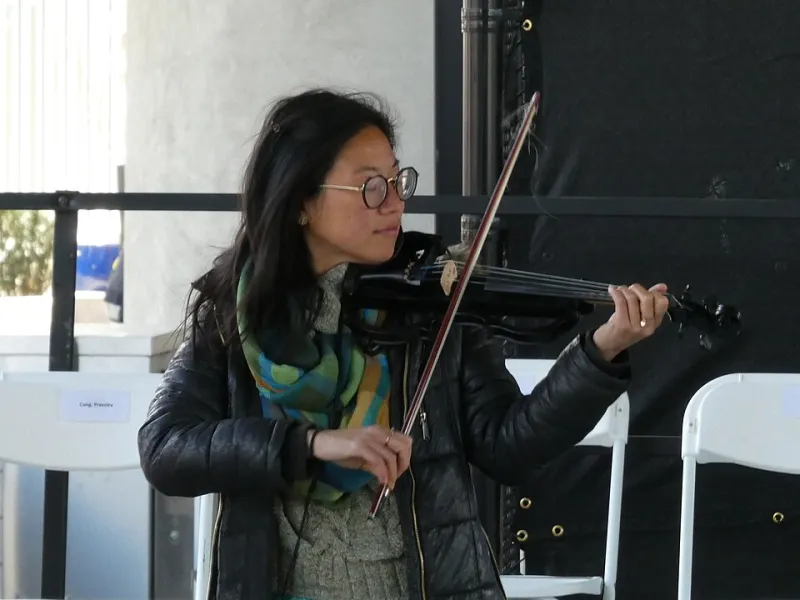
For a guest soloist, this creates real practical challenges. A violinist who has rehearsed a concerto at 440 must adapt within minutes when the host orchestra sits at 442 — every finger position subtly shifted, every resonance point on the instrument moved. Instruments themselves are built and adjusted around pitch: a violin strung for modern A carries different tension than one set up for baroque practice. The tuning A, seemingly universal, is in fact a negotiation that happens long before the audience arrives.
The Ritual Beneath the Utility
Strip away the acoustics and the history, and something else remains — something closer to ceremony.
Audiences instinctively understand this. The tuning A marks the threshold: the moment the hall stops being a room of strangers and becomes a gathering. Phones go dark. Program notes close. The sound is communal and slightly imperfect — a chord of two hundred instruments and two thousand listeners settling into shared attention. When the oboe's note fades and the conductor walks out, everyone present has already participated in the concert's first act of unity.
There is a lesson in that for students. In masterclasses, one often hears young violinists obsess over the notes they will play and forget the silence before them. But the tuning A teaches that music begins before music: in alignment, in agreement, in the discipline of matching one's voice to a collective reference. It is humility rendered as sound.
Listen Differently Next Time
The next time you sit in an American concert hall, resist the temptation to treat those thirty seconds as waiting. Notice the concertmaster's gesture — a raised bow, a glance toward the winds. Notice how the strings lean into the oboe's pitch like a tide finding its level. Notice that for a few seconds, nothing in the room is performing, and everything is listening.
One note, sustained together. It may be the most honest music of the evening.