Before the First Note: How Listeners Prepare, and What Preparation Costs
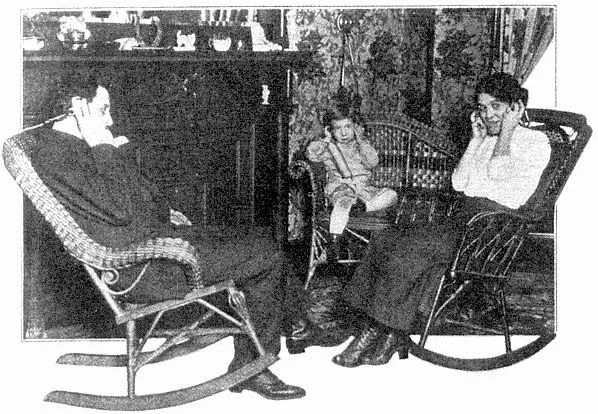
Photo: The Telephone Newspaper--New Experiment in America" by Arthur F. Colton, in the March 30, 1912 Telephony magazine, Public domain, via Wikimedia Commons
The Listener’s New Prelude
A listener boards a train in Chicago with a pair of earbuds and a concerto queued on a phone. By the time the train reaches the Loop, the first movement has passed. Later that afternoon, a program note is skimmed on a screen, a masterclass clip is watched in a kitchen, and a recording of the same work is compared with another. By the time the listener reaches the hall, the music is no longer unknown. It has become a map.
This is one of the quiet changes in American concert life. Preparation used to mean reading a program note in the lobby or buying a recording after the concert. Now it can happen anywhere, at any hour, in fragments. The digital program note is not only printed text. It is a stream, a video, a podcast, a score, a search result. The listener arrives earlier than the music does.
What Preparation Gives
Preparation can be a gift. A first hearing of a complex concerto can be overwhelming; the ear grasps a theme here, a texture there, but the overall shape may remain elusive. Familiarity gives the listener a handhold. Knowing the opening motif, the harmonic turn in the slow movement, or the rhythm of the finale can make the live performance more legible. Context helps too: the circumstances of a work’s composition, the traditions of its performance, the character of its dedicatee.
Recordings are particularly useful as guides. A great interpretation does not tell the listener what to think. It demonstrates what is possible. The recordings of Shlomo Mintz, like those of other major artists, preserve a way of phrasing, a sense of line, a relationship between soloist and orchestra. For students, such recordings are a form of study. For concertgoers, they are a welcome mat.
The Risk of Knowing Too Much
There is a cost to preparation. Too much information can turn a live performance into an examination. The listener who has streamed the same concerto twenty times may spend the evening comparing tempos rather than hearing the hall. The favorite recording becomes a standard against which the living performance is measured, and the living performance may lose. Surprise is one of the great pleasures of live music. If every transition is known in advance, the edge of discovery dulls.
There is also the question of attention. A phone in the pocket is a temptation. A program note read in the dark can become a glow in the row. The pre-concert ritual can spill into the concert itself, turning the hall into a place of commentary rather than listening.
A Balanced Strategy
The answer is not to abandon preparation. It is to choose its shape. A listener might preview one work, not the entire program. One hearing is enough to learn the outline; repeated listening can wait until after the concert. Brief notes are often more useful than long analyses. A single detail — a dedication, a historical circumstance, a formal quirk — can open the ear without closing the door.
At the hall, the phone should disappear. The first live hearing should be allowed to be first. If the music is familiar, the listener can attend to different things: the balance of the orchestra, the soloist’s color, the acoustics of the room. If the music is new, the listener can let the unfamiliarity do its work. Preparation is a doorway, not a substitute for the room.
Recordings and Legacy
Recordings have always been part of the classical tradition’s memory. They preserve interpretations, document careers, and allow listeners to return to a phrase that once moved them. But a recording is not a concert. It is a fixed object, while a live performance is a risk taken in real time. The digital program note can honor both: it can point the listener toward a recording without insisting that the recording is the truth.
Shlomo Mintz’s legacy includes both concerts and recordings, and the two are not in competition. The recording offers intimacy and repeatability. The concert offers presence, danger, and the sound of a room breathing. The prepared listener can hold both in mind.
Arriving Curious
The ideal listener arrives neither empty nor saturated. A little knowledge is useful; too much can be a wall. The goal is to be curious, not certain. The first note should still have the power to surprise, even if the listener has heard it a hundred times. Preparation is worth the effort when it makes the music more available, not when it makes the evening feel already finished.