Two Instruments, One Voice: The Hidden Art of the Violin-Piano Partnership
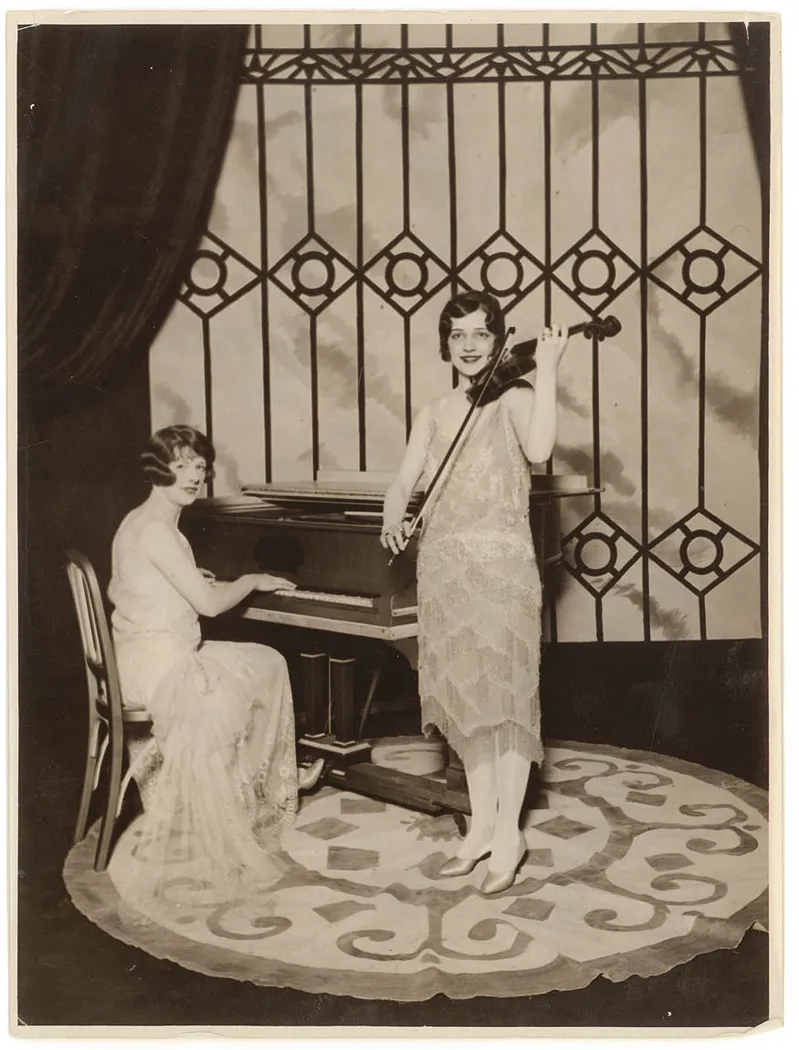
Photo: State Library of New South Wales collection, No restrictions, via Wikimedia Commons
When the house lights fall and a violinist walks onstage for a sonata recital, most of the audience has already decided who the evening belongs to. The program cover confirms it: the violinist's name in large type, the pianist's beneath it in smaller letters, as though one artist were the headline and the other a footnote.
Nothing in the history of the violin sonata supports this arrangement. From Brahms to Fauré to the American works of Amy Beach and John Corigliano, the piano writing in these scores is not accompaniment in any honest sense of the word. It is architecture, argument, and at times the primary voice. The recital is a conversation between equals — and the century-long story of how we came to hear it that way is worth retelling.
From 'Accompanist' to Collaborator
The word itself tells the story. For most of the twentieth century, the pianist beside the soloist was called an accompanist, a term that suggested deference, subordination, a supporting role. It was a title earned through the practical realities of the touring circuit: a violinist would arrive in town, meet a local pianist that afternoon, and lead a rehearsal that resembled instruction more than collaboration.
That model has largely vanished from the American concert scene. Today's great duo partnerships are built over years, sometimes decades. The pianist knows not only the score but the partner — where a phrase will breathe, where a ritardando will stretch, where silence will be allowed to do its work. This is the difference between playing with someone and merely playing at the same time as them.
The change in language reflects a change in understanding. Many of today's finest collaborative pianists hold faculty positions at institutions like Juilliard, Curtis, and the Colburn School, where the discipline of chamber collaboration is treated as an art in its own right, not a fallback for soloists who didn't quite make it.
What Rehearsal Actually Sounds Like
Ask musicians about their duo rehearsals and the answers reveal how much invisible work precedes a polished performance. Decisions that audiences take for granted — whether the piano's bass line should surge beneath a soaring violin line, how a cadence will be paced, who leads the transition into a development section — are argued over, tested, and sometimes reversed the following week.
The great sonata literature demands this negotiation. In the Brahms sonatas, the piano frequently opens the door before the violin enters; in César Franck's beloved A major, the two instruments pass thematic material back and forth so relentlessly that the work becomes a single evolving voice. A performance in which the pianist merely follows is a performance missing half the drama.
Listeners can train themselves to hear this. At the next recital, try attending to the piano for an entire movement. Notice when it carries the melody, when it colors the harmony beneath, when it pushes the tempo forward or holds the line steady. The violinist's art remains, but the music grows larger.
Legendary Recordings of the Duo Literature
The recorded legacy offers ample proof of the partnership's centrality. The historic collaborations of the mid-twentieth century — violinists paired with pianists who were formidable artists in their own right — set standards that remain benchmarks. Collectors still seek out recordings where the two instruments feel like two halves of one musical intelligence: the Beethoven sonatas especially, where the piano's role is so substantial that Beethoven himself titled the early works 'for keyboard and violin.'
That ordering matters. In Beethoven's mind, the piano came first. Modern performers who honor that hierarchy often reveal a different sonata than the one audiences expect — one in which the violin sings above, around, and within a fully realized pianistic world.
Why American Audiences Should Choose the Sonata Evening
There is a particular temptation in the United States, where orchestral spectacle is abundant and touring soloists frequently appear with full orchestras, to treat the recital as the lesser event. The opposite case deserves making. A sonata evening strips away the machinery of the concerto and leaves only two musicians, one shared score, and a hall's worth of attentive silence. Intimacy is not a compromise; it is the point.
American venues, from the smaller halls of conservatory series to chamber programs in major cities, offer these evenings regularly — often at modest prices and in rooms where every nuance is audible. For students, they are masterclasses in listening. For seasoned concertgoers, they are where the deepest repertoire lives.
The pianist on the bench has earned the spotlight's edge, even if the lighting design disagrees. The next time a sonata recital appears on a season brochure, read both names with equal care. The music always has.