Four Hertz Short of History: What the A=432 Debate Really Sounds Like on a Violin
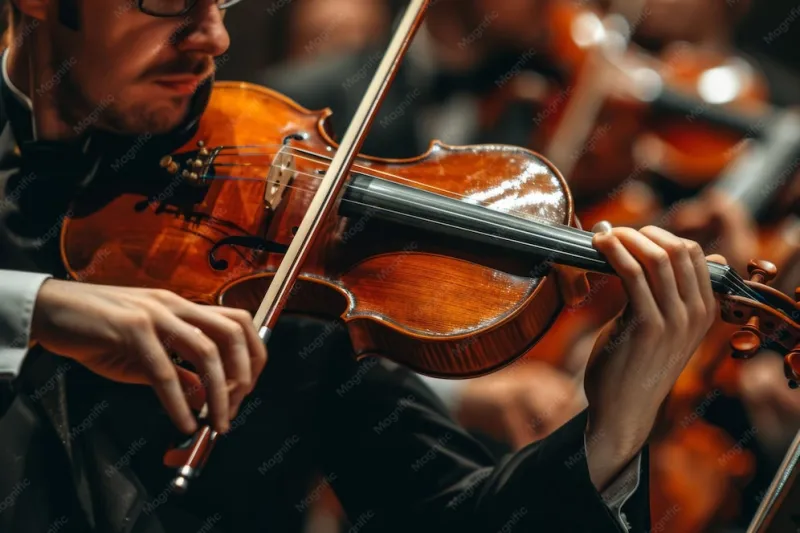
Photo: violinist tuning strings close up orchestra, via img.freepik.com
Somewhere in your streaming queue, right now, an album is advertised as 'tuned to 432 Hz — the frequency of the universe.' The claims that follow are familiar: warmer sound, deeper resonance, healing vibrations. The counterclaims are equally familiar: pseudoscience, placebo, revisionism. For a student violinist — or a concertgoer who has wandered into this argument online — it can be difficult to know what actually matters.
The honest answer is that the debate is less about physics than about history, habit, and the peculiar way a violin is built. And that makes it worth a careful look.
A Pitch with a Paper Trail
There was never a single 'correct' A. In the eighteenth century, tuning forks from different European cities could differ by nearly a semitone; a pitch that suited a church organ in Leipzig might have strained a Baroque violinist in Paris. Orchestras in the nineteenth century drifted upward — higher pitch meant, at least in theory, more brilliance — until governments stepped in. In 1939, an international conference in London settled on A=440, and the American Standards Association followed in 1917 and again in 1953, cementing 440 as the standard in the United States.
But the old pitches never vanished. Period-instrument ensembles tune to 415 or 430 to serve historical repertory. Some European orchestras sit at 443. The 'debate,' in other words, is older than the internet — the internet has merely given it a megaphone.
What the Ear Actually Hears
Here is the part rarely mentioned in online forums: most listeners cannot reliably distinguish a recording at 432 from one at 440 in a blind test. The difference is roughly eight hertz — about a fifth of a semitone. Studies on pitch preference consistently find that when listeners do express a preference, they tend to favor the slightly brighter, marginally higher pitch, not the lower one.
So why do 432 recordings often sound 'warmer'? Frequently, the answer is engineering, not pitch. A recording re-pitched downward also changes in duration and timbre in ways the ear reads as mood. Context does the rest. The ear is remarkably adaptable: after ten minutes in a hall tuned to 432, that pitch simply becomes 'in tune.'
Why the Violin Is a Special Case
For a pianist, pitch is fixed before the first note. For a violinist, it is negotiable every second. The instrument has no frets and no fixed temperament; the player chooses each pitch by ear, moment to moment. A violinist playing with a piano tuned to A=440 will unconsciously bend thirds and leading tones to fit the harmonic context — a practice rooted in expressive intonation that no single reference frequency can capture.
This is why masterclass teachers tend to shrug at the 432 question. What matters is not the reference point but the internal discipline: can the student hear the interval before playing it, and adjust to colleagues in real time? A violinist with a trustworthy ear functions beautifully at 440, 432, or 415. One without will sound out of tune at any frequency.
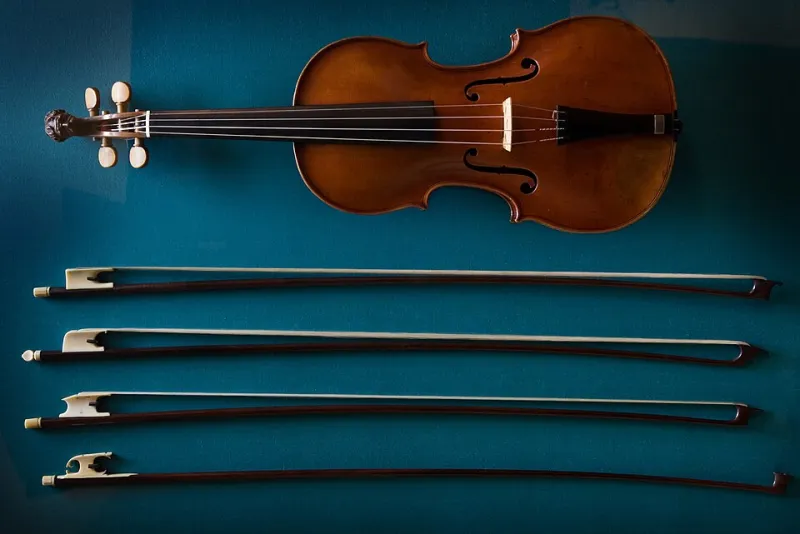
There is one practical footnote: strings are designed with 440 in mind. Tuning a modern set down to 432 can leave the instrument feeling slack and unresponsive, though some players on period setups manage it with historically appropriate strings and tension.
Guidance for Students and Curious Listeners
If you are a student: tune to your ensemble. In an American youth orchestra, conservatory orchestra, or with a collaborative pianist, that means A=440. Learn to hear intervals relationally rather than chasing an absolute number.
If you are a listener: enjoy the 432 recordings if you like them — many are lovely — but know that the effect you hear is more likely interpretation, acoustics, and production than frequency. And when you attend a performance at an American hall, from Boston to San Francisco, you will almost certainly hear 440.
The deeper lesson of the debate is a healthy one: pitch standards are human agreements, not laws of nature. The universes that matter are the ones a musician builds between the notes.