Why a Three-Century-Old Cremona Violin Still Commands the Stage
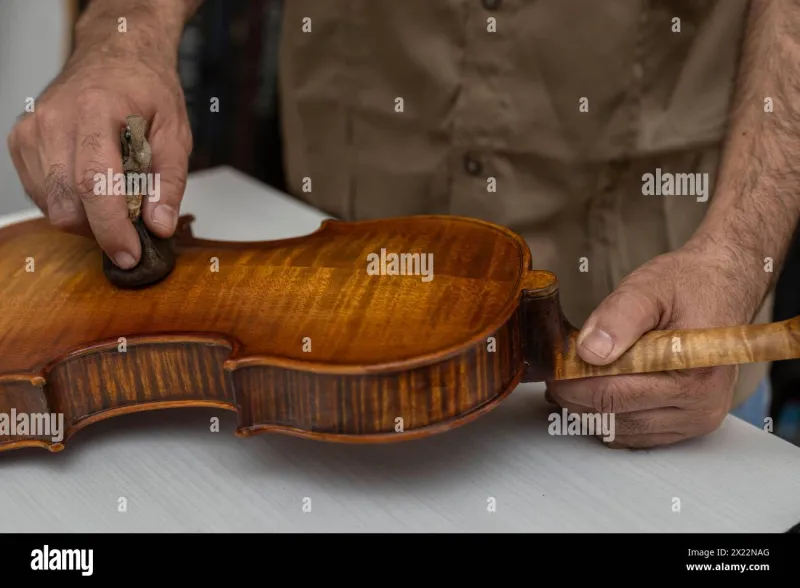
Photo: antique violin close-up varnish detail luthier workshop, via c8.alamy.com
There is a question every concertgoer eventually asks: why do the world's leading violinists spend fortunes, and sometimes careers, pursuing instruments made in a small Italian town three hundred years ago? The short answer is that nothing made since quite matches them. The longer answer is more interesting, and it says as much about partnership and tradition as it does about wood and varnish.
The Cremonese Anomaly
Between roughly 1650 and 1750, the workshops of Cremona — dominated by the Amati, Stradivari, and Guarneri families — produced instruments whose acoustic properties have never been convincingly replicated. Antonio Stradivari's so-called "golden period," from about 1700 to 1720, yielded violins with a carrying power and tonal complexity that modern makers study endlessly.
Explanations abound: the density of alpine spruce shaped by a colder Little Ice Age, mineral treatments of the wood, the varnish recipe, the arching geometry, and simply three centuries of playing that has, some argue, opened the instrument like a voice matures with age. No single theory has won. What is certain is that the finest examples — a Stradivari or a Bartolomeo Giuseppe Guarneri del Gesù — project to the last row of a modern concert hall with a warmth that many contemporary instruments achieve only in smaller rooms.
The prices reflect that scarcity. Fewer than six hundred Stradivari instruments survive, and the finest of them trade hands in the eight-figure range — sums that put a violin above nearly any supercar, with the crucial difference that the violin appreciates while being used every single day.
How a Soloist Finds "The One"
Choosing an instrument is less a purchase than a courtship. Soloists typically work with dealers in New York, Chicago, London, or Cremona itself, borrowing candidate instruments for weeks at a time. The trial involves playing in different halls, recording the same passage on each instrument, and listening to how each one responds under pressure — in a fast spiccato passage, in a sustained pianissimo, in the upper positions where many violins thin out.
What a player seeks is highly individual. One artist wants darkness and growl, favoring a Guarneri; another wants brilliance and clarity, leaning toward a Stradivari. The instrument must also suit the repertoire: a Brahms concerto asks for something different than a Vivaldi cycle. And because few performers own such instruments outright, many play on loans from foundations, banks, and collectors — arrangements that have quietly become the backbone of the solo world.
Life on the Road With a National Treasure
Touring with a multimillion-dollar violin is a logistical discipline most audiences never see. The instrument flies in the cabin, never in cargo, in a carbon-fiber case with humidity control. Insurance is bespoke and international. Climate matters more than travelers might guess: a winter flight from a New York February into a heated hall can crack a plate if the instrument is not acclimated slowly.
Daily care is equally exacting. Strings are changed on a schedule, the bridge is checked for straightness as tuning tension pulls it forward, and the soundpost — the small dowel inside the body — is adjusted seasonally by a trusted luthier, sometimes by a few millimeters to suit a hall or a repertoire.
What the Listener Should Take Away
For the audience, none of this is trivia; it changes how you hear a concert. When a soloist draws a long, singing line in the slow movement of a Mendelssohn concerto, you are hearing a collaboration between a living artist and a maker who died in 1737 — a conversation across three centuries, transmitted through horsehair, gut, and spruce.
That is the honest answer to the supercar comparison. A great car isolates you from the world. A great violin is built to be heard by strangers in distant cities, and every night it does exactly what it was made to do. Few objects of any price can make the same claim.