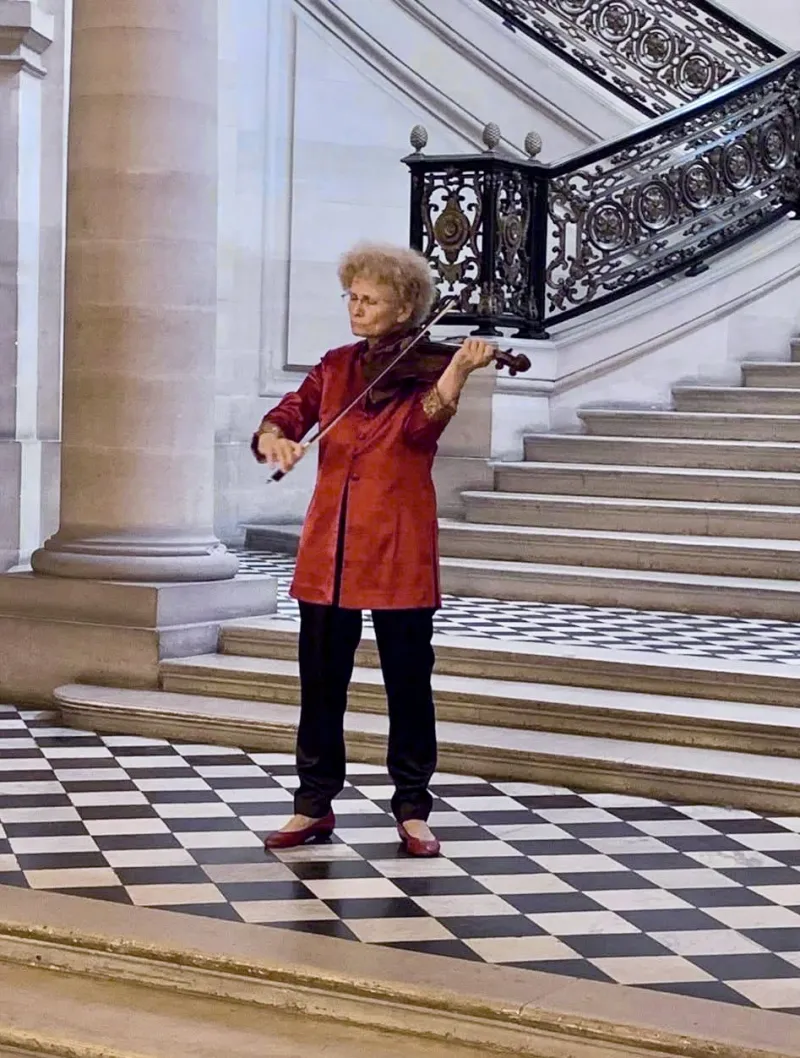
A Season in Advance: The Art of Planning Around a Touring Violinist
Photo: SALTOnline, No restrictions, via Wikimedia Commons
For followers of popular music, the idea of tracking an artist across multiple cities is familiar territory. Classical audiences, however, often treat each concert as an isolated event. This is a missed opportunity. A touring soloist's season is a narrative — one that unfolds differently in every hall, with every orchestra, and with every program choice. Learning to follow that narrative transforms a series of concerts into a coherent artistic journey.
Reading the Calendar Like a Box-Office Insider
Tour schedules for major violinists are typically announced six to twelve months ahead, often through orchestra season announcements rather than the artist's own website alone. A useful habit is to check the season brochures of the orchestras you can realistically reach — in the US, that might mean the New York Philharmonic, the Chicago Symphony, the Los Angeles Philharmonic, or a regional ensemble like the Baltimore Symphony or Utah Symphony.
Notice the shape of the season. Soloists often cluster engagements around a particular concerto, rehearsing and refining one work over several weeks. If you spot the same concerto appearing in three consecutive tour stops, you are looking at a performer in deep immersion with a score — and a rare chance to hear how interpretation evolves.
Choosing the Right Hall and the Right Program
Not all venues flatter the violin equally. A dry, intimate hall such as Boston's Jordan Hall reveals bow noise, nuance, and the whisper of a piano accompaniment in ways that a cavernous 2,800-seat hall cannot. Larger venues favor power and projection — a Sibelius or Tchaikovsky concerto thrives there in a way that a Mozart sonata may not.
Program selection matters just as much. Consider:
- The concerto itself. A warhorse you know well lets you hear the performer's individuality clearly; an unfamiliar work keeps you listening as a newcomer.
- What surrounds it. A soloist appearing on an all-Beethoven program is making a statement different from one booked for a contemporary premiere.
- The conductor pairing. Long-standing artist-conductor partnerships often signal polished, risk-taking collaborations.
Timing and Ticketing Without Regret
Single-ticket sales for marquee soloists open earlier than many listeners realize — frequently at the start of the orchestra's season, in late spring or summer. Premium seats at a fair price are a genuine consideration: for a violin concerto, the left half of the hall, roughly rows L through S on the orchestra level, offers the best balance of detail and blend. Extreme side-view boxes can occlude the bow arm, which matters when half the expressive content of the instrument lives in the right hand.
If a date sells out, do not assume you have missed it. Open rehearsals, student-rush programs, and pre-concert lectures frequently offer access at modest prices — and the rehearsal format itself, with stops and restarts, is an education no recording can provide.
What to Listen For When the Program Repeats
The real connoisseur's pleasure comes from comparison. Attend the same concerto twice in one season — say, in Philadelphia and again in San Francisco — and differences will surface quickly. Listen for:
- Tempo flexibility. Does the second movement breathe more slowly with one orchestra than the other?
- Balance. How the solo line sits against the strings changes with the conductor and the acoustics.
- Cadenzas. Soloists sometimes alter or substitute cadenza material from one engagement to the next.
- The final minutes. Endings are where interpretation is most exposed; compare how the last chords are weighted.
Keep a small notebook or a note on your phone. Written impressions immediately after a performance are remarkably durable, and over a season they become a private history of an artist's work.
Beyond the Concert Hall
Masterclasses and recitals often bracket the orchestral dates on a touring itinerary. A morning masterclass at a conservatory or university — open to the public more often than people assume — shows the pedagogical side of a performing career and frequently clarifies exactly what you were hearing the night before.
A season followed deliberately, from the first announcement in the spring to the final bows in the spring after, offers something streaming cannot: the sense of an artistic life unfolding in real time, one hall and one city at a time.