Seven Rooms in a Musical House: The Recordings That Tell Shlomo Mintz's Story
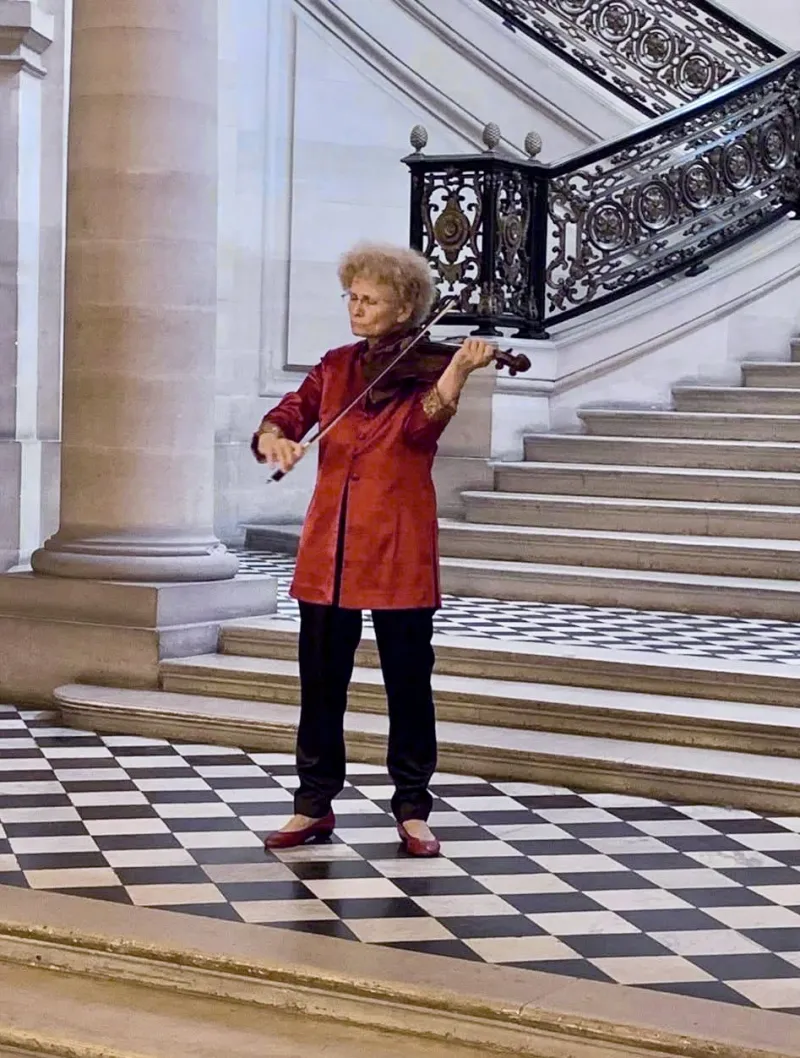
Photo: Slavacheri, CC0, via Wikimedia Commons
Every major violinist leaves behind a discography, but few leave behind one that reads as clearly as a biography. Shlomo Mintz's recorded legacy does precisely that: trace it chronologically and you hear a child prodigy mature into a stylist, a stylist deepen into a poet, and a poet settle into the calm authority of a master interpreter.
What follows is not a ranking. It is a guided walk through seven rooms of a musical house — each one built around a composer Mintz has lived with for decades. Whether you are hearing his name for the first time or have worn out your original LPs, these selections reward attention.
The Wunderkind's Calling Card: Mendelssohn's Violin Concerto
Mintz was still a teenager when he recorded Mendelssohn's E minor Concerto, and the performance carries the unmistakable electricity of youth — clean intonation, fearless tempos, and a first movement played as though the outcome were never in doubt. Yet even then, there was a hint of the interpreter to come: a refusal to rush the lyrical second theme, a patience unusual in a player so young.
Listening note for newcomers: Compare the opening with any modern recording and notice how much Mintz achieves without apparent effort. For longtime fans: this is the yardstick against which his later Mendelssohn — broader, warmer — should be heard.
Fire and Precision: Brahms at Full Strength
The Brahms Violin Concerto in D major is the ultimate test of stamina, architecture, and ensemble trust, and Mintz's performances of it — on record and in American concert halls from coast to coast — reveal a player who thinks in long paragraphs rather than sentences. His handling of the slow movement, with its serene oboe opening answered by the violin, is a study in restraint.
Listening note: Follow the finale's dance rhythm. Mintz keeps it light where lesser performances let it turn heavy.
Northern Light: The Sibelius Concerto
If Brahms is architecture, Sibelius is landscape — and Mintz's Sibelius has long been counted among his signature achievements. The first movement's long solo ascent, emerging from murmuring strings, gains a glassy, almost arctic clarity under his bow. This is playing that favors atmosphere over display, and it is why the interpretation remains instantly recognizable: few violinists are willing to sound this spare.
Listening note for newcomers: This is the track to start with if you want to understand what people mean when they describe a violinist's "voice."
The Romantic Confession: Tchaikovsky
Mintz's Tchaikovsky Concerto balances virtuoso brilliance with a cantabile warmth that suits the composer's operatic instincts. The canzonetta — that haunting slow movement — is where his phrasing is at its most personal: each phrase shaped as if spoken, with breath and hesitation built into the line.
Listening note: Notice the silences. What Mintz leaves unplayed matters as much as what he plays.
Baroque Clarity: Bach's Sonatas and Partitas
Recorded interpretations of the Bach solo works often split into two camps: the dancer and the cathedral. Mintz, characteristically, refuses the choice. His Partita No. 2 in D minor moves with rhythmic freedom while never losing the long harmonic arc that culminates in the monumental Chaconne.
Listening note for longtime fans: Hear the Chaconne as a single, unbroken narrative — Mintz's dynamic gradations chart it like chapters of a novel.
Chamber Musician's Instinct: Beethoven's Sonatas
A violinist's generosity shows most clearly in the Beethoven sonatas, where the piano is an equal partner. Mintz's collaborations in this repertoire reveal his ensemble sensibility: the give-and-take, the willingness to recede so a colleague's phrase can bloom. For students, these recordings are practically a masterclass in ensemble etiquette.
Listening note: In the "Spring" Sonata, listen to how the two instruments trade the melody rather than compete for it.
The Full Circle: Vivaldi's Four Seasons
Mintz's recording of Vivaldi's The Four Seasons — leading an orchestra from the concertmaster's chair — captures a different facet of his artistry: the leader-teacher, shaping an ensemble with gesture and example. The playing is crisp, stylish, and unexpectedly dramatic, proof that early music need not sacrifice passion for scholarship.
Listening note for newcomers: This is the most accessible entry point in the entire catalog — and the one most likely to send you to a live concert.
A Voice You Know When You Hear It
What unites these seven interpretations is a quality critics have struggled to name: a singing, speech-like phrasing that treats every melody as language. Call it clarity, call it honesty — once you have heard it, you will recognize Shlomo Mintz within a few bars, in any repertoire, in any hall.
The recordings above are only the map. The territory is best experienced live, where the phrasing breathes in real time. Consult the concert calendar on this site and hear the story continue.