Eight Bars Before the Music Begins: The Quiet Signals a Master Hears First
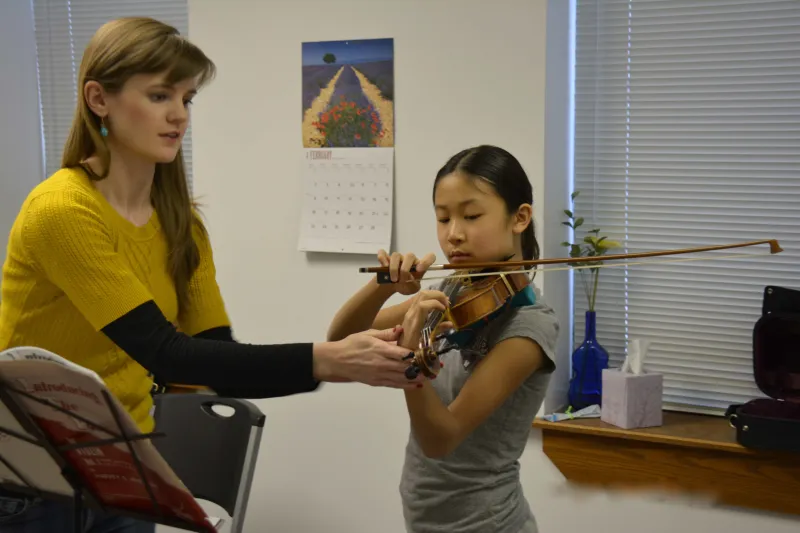
Photo: violin masterclass teacher student concert hall stage, via chicagoschoolofmusic.com
In the great concert halls of the world, an audience typically needs several minutes to decide whether a performance has captured them. A master teacher does not have that luxury — nor, in truth, does a master teacher need it. Ask any seasoned pedagogue, and they will tell you the same thing: the opening bars of a student's performance, even a nervous, imperfect opening, communicate nearly everything.
At masterclasses in conservatories from Juilliard to the Colburn School, the first minute is rarely about the notes. It is about what surrounds the notes. Understanding what a teacher of Shlomo Mintz's experience listens for in those first moments can transform how students prepare — not for the masterclass, but for a lifetime of playing.
The First Sound Is a Biography
The instant the bow meets the string, a teacher hears a player's history. Tone is not an ornament added later; it is the residue of thousands of hours of practice, of attention or inattention, of habits formed in bedrooms and practice rooms across years.
A centered, ringing tone suggests a student who has listened to themselves honestly. A thin, pressed, or unfocused sound suggests the opposite — not a lack of talent, but a lack of awareness. This is why so many masterclass teachers begin not with the passage at hand, but with a single sustained note. Everything that follows in a performance is built on the quality of that first contact.
Bow Contact: Where Honesty Lives
If tone is the biography, the bow is the handwriting. The way a young violinist places the bow — the speed, the pressure, the point of contact between bridge and fingerboard — reveals their relationship with the instrument more candidly than anything they might say.
Teachers listen for several specific things in the opening bars:
- Weight versus pressure. A player who presses produces a strangled sound; a player who releases weight into the string produces resonance. The distinction is audible within seconds.
- Consistency at the frog and the tip. Unevenness across the bow exposes gaps in fundamental training.
- The start of the note itself. Does the sound bloom, or does it crackle into being? A clean onset — what string players call the attack — is one of the most reliable indicators of careful practice.
- Bow distribution. Whether the student plans the bow or merely survives it tells a teacher how the rest of the performance will unfold.
None of these elements can be faked. They are present from bar one, which is why the first eight bars — a phrase borrowed from the common wisdom of the teaching studio — carry such diagnostic weight.
Breathing: The Invisible Foundation
Perhaps the most overlooked signal is the least audible. Watch a fine violinist before they play, and you will see them breathe. Not nervously, not performatively — but in a way that prepares the body for the phrase to come. The breath shapes the bow; the bow shapes the sound.
Students who hold their breath before playing almost always produce tight, hurried openings. Students who breathe naturally tend to phrase with a logic that no amount of finger technique can supply. In a masterclass setting, an experienced teacher will often address the breath before addressing the left hand, because a relaxed, singing breath solves problems that no amount of drilling can.
What Students Can Do Before They Ever Play for a Master
Preparation for a masterclass is not different in kind from preparation for a performance — it is simply more honest. A student who wishes to make the most of a rare hour with a great artist might consider the following checklist:
- Record your first eight bars. Not the whole piece — just the opening. Listen back without playing. What do you hear that you did not notice while playing?
- Practice the onset of the note. Begin from silence, dozens of times, until the first sound is one you would choose.
- Breathe deliberately. Mark a breath before the first phrase and honor it in every practice session, so that under pressure it remains automatic.
- Examine your bow contact daily. Play open strings in front of a mirror. Resonance is visible as well as audible.
- Prepare your questions. A masterclass is a dialogue, not an audition. Knowing what you want to learn changes what you are able to learn.
The Masterclass as Mirror
There is a temptation, especially among ambitious young American students raised on competitions and conservatory auditions, to treat a masterclass as a test to be passed. The finest teachers see it differently. They hear the opening bars not as a verdict but as a map — a quick, accurate picture of where a player stands and where they might go.
The student who arrives with a ringing tone, an honest bow, and a settled breath gives the teacher something valuable: a foundation worth building on. Everything else — the interpretation, the virtuosity, the personality — can be refined in the hour that follows. But the first eight bars are already written. The art of preparation is making sure they are worth hearing.