The Ones Who Make the Solo Possible: A Week of Trust Behind the Second Chair
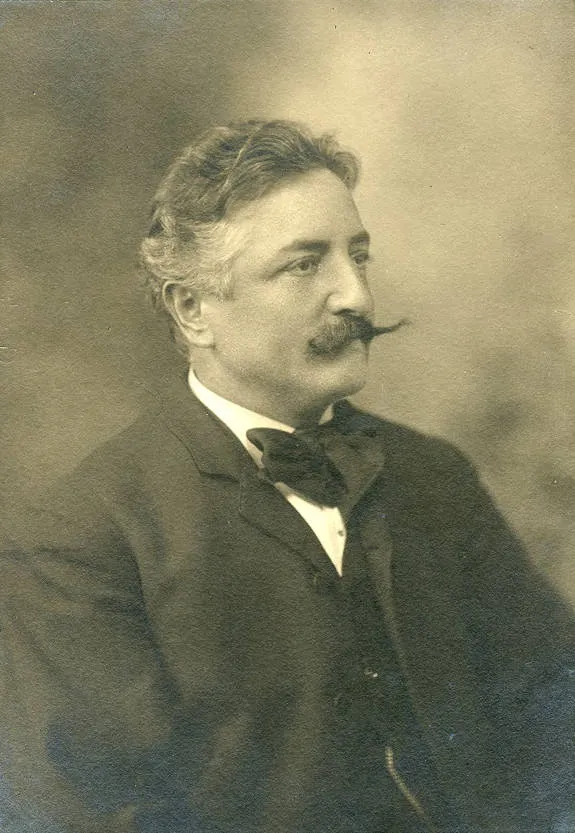
Photo: Unknown authorUnknown author, Public domain, via Wikimedia Commons
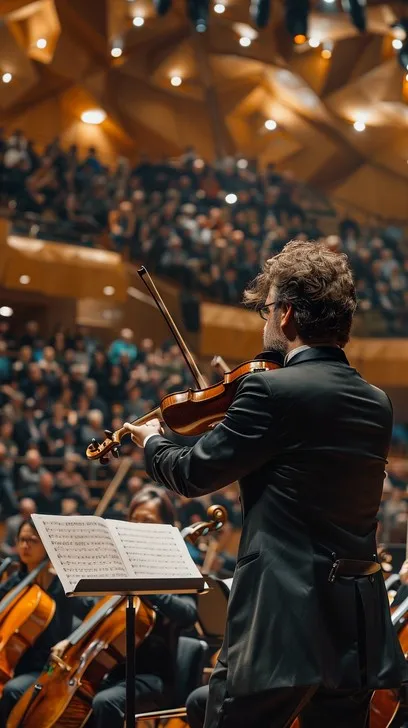
From the audience's vantage point in a hall like Boston's Symphony Hall or Chicago's Orchestra Hall, the arithmetic of a concerto evening seems simple. One violinist steps forward, plays, bows, and departs. The orchestra — forty, eighty, a hundred musicians — recedes into the background of the story, a rich but anonymous landscape against which the solo figure is drawn.
Anyone who has sat inside a rehearsal week knows the arithmetic is wrong.
The First Handshake Happens on Tuesday
A guest soloist typically joins an American orchestra only days before the first performance, sometimes with as little as two or three rehearsals on the schedule. Within that compressed window, something remarkable must occur: a hundred strangers and a visitor have to agree on tempo, phrasing, breathing, and silence.
The process begins well before the soloist arrives. The music director and orchestra librarians have already settled on an edition of the score. The concertmaster — the musician seated at the front of the first violins, often called the orchestra's second-in-command — has likely marked bowings that will be distributed to every string player on the roster. When the soloist walks in, those bowings become the first point of negotiation. A violinist who wants a particular slur across a bar line will raise it with the concertmaster, not with the whole ensemble. One conversation, and the change ripples outward through the section.
It is a quiet, practical diplomacy that audiences never witness, and it depends almost entirely on the concertmaster's dual identity: leader of the string section, translator for the guest, and guardian of the orchestra's collective voice.
What the Podium Doesn't Say
In a concerto, the conductor's gesture is often a courtesy rather than a command. During the long orchestral tuttis, yes — the podium shapes everything. But in the intimate passages, when the violinist is spinning a pianissimo line over a thread of accompaniment, the real coordination happens laterally.
The principal oboist will watch the soloist's bow arm. The principal cellist, seated close to the front, becomes the anchor of the bass line, placing each note where the soloist breathes rather than where the baton lands. Clarinets and flutes learn the soloist's rubato the way one learns a friend's walking pace — by listening, adjusting, anticipating.
Veteran players describe this as the true craft of orchestral accompanying. It cannot be notated. It can only be rehearsed, and even then, mostly absorbed. A first-desk wind player once described the job to this writer as 'playing chamber music with someone you met an hour ago, in front of two thousand people.'
The Rehearsal Arithmetic
Consider the actual budget of time. A typical American orchestral week might include a reading rehearsal on Tuesday, a fuller session on Wednesday, a dress rehearsal on Friday morning, and performances Friday night through Sunday afternoon. Perhaps six or seven hours of shared rehearsal for a concerto the soloist has performed a hundred times and the orchestra may be playing for the first time this season.
That economy explains a phrase soloists use again and again: the best orchestras make you feel safe. Not complacent — safe. Safe enough to take a risk in the second movement, to stretch a phrase, knowing the principal winds will arrive with you rather than after you. That safety is manufactured, deliberately, in those few rehearsal hours, through the accumulated attentiveness of section leaders whose names never appear on the marquee.
Why the 'Solo' in Soloist Misleads
The terminology is a historical accident, a holdover from an era when the concerto was framed as a contest — one voice against the many. The Romantic repertoire preserved the drama of that framing, but the working reality of the modern symphony orchestra has left it far behind.
What audiences respond to on a good night is not one musician's triumph but a temporary institution: a hundred people agreeing, in real time, on where the music lives. The violinist in the spotlight is the most visible part of that agreement, nothing more and nothing less.
The next time the house lights fall and the concertmaster stands to tune the orchestra — a small ritual, a rising and a nod — consider what that gesture actually certifies. It says that the ensemble is ready to listen outward as much as inward. It says the second chairs are already at work.
The solo, it turns out, is the easy part to see. The music is in everything else.